

Creating an email marketing strategy involves several key steps. It requires clear goals, understanding your audience, and crafting compelling content.
Email marketing is a powerful tool for businesses. It helps you connect directly with your audience. But without a solid strategy, your emails might go unnoticed. A well-thought-out plan ensures your emails are effective. It maximizes engagement and drives conversions.
This guide will show you how to create a successful email marketing strategy. We’ll cover everything from setting goals to analyzing results. Whether you’re new to email marketing or looking to improve, this guide will help you succeed. Let’s dive into the steps to build your strategy.
Introduction To Email Marketing
Email marketing is a powerful tool for connecting with your audience. It allows businesses to reach customers directly in their inboxes. A well-crafted email marketing strategy can drive engagement, build brand loyalty, and increase sales.
Importance Of Email Marketing
Email marketing holds significant importance in today’s digital landscape. Here are some key reasons why:
- Direct Communication: Emails land directly in the inbox, ensuring higher visibility.
- Cost-Effective: Compared to other marketing channels, email marketing is budget-friendly.
- Measurable Results: Track open rates, click-through rates, and conversions easily.
- Personalization: Tailor content to individual preferences, improving engagement.
- High ROI: Email marketing consistently delivers high returns on investment.
Current Trends
Staying updated with current trends is crucial for a successful email marketing strategy. Here are some trends to consider:
- Interactive Emails: Use interactive elements like quizzes, polls, and image carousels to engage subscribers.
- AI and Automation: Leverage artificial intelligence for personalized content and automated workflows.
- Mobile Optimization: Ensure emails are mobile-friendly, as more people check emails on their phones.
- User-Generated Content: Incorporate testimonials, reviews, and user photos to build trust.
- Data Privacy: Adhere to data privacy regulations and build trust with transparent practices.
By understanding the importance of email marketing and staying updated with current trends, you can craft an effective email marketing strategy. Begin today and watch your engagement and sales grow.
Contents
Setting Goals
Creating an effective email marketing strategy starts with setting clear goals. Goals guide your efforts and help measure success. They offer direction and keep the strategy focused. Without defined goals, it’s easy to lose track of what matters.
Identifying Objectives
First, identify the main objectives of your email marketing campaign. Ask yourself what you want to achieve. Common objectives include:
- Increasing brand awareness
- Boosting sales and revenue
- Growing your email subscriber list
- Improving customer engagement
- Driving traffic to your website
Each objective should align with your overall business goals. Clear objectives give your strategy purpose and direction. They help you tailor your content and approach.
Measuring Success
Next, determine how you will measure success. Use Key Performance Indicators (KPIs) to track progress. Common KPIs in email marketing include:
| KPI | Description |
|---|---|
| Open Rate | Percentage of recipients who open your email |
| Click-Through Rate (CTR) | Percentage of recipients who click links in your email |
| Conversion Rate | Percentage of recipients who complete a desired action |
| Unsubscribe Rate | Percentage of recipients who opt out of your emails |
| Bounce Rate | Percentage of emails that could not be delivered |
Tracking these KPIs helps you understand the effectiveness of your campaigns. Adjust your strategy based on the data to improve results.
Building Your Email List
Building your email list is a crucial step in creating an effective email marketing strategy. The quality of your email list can significantly impact your campaign’s success. To ensure you have a strong and engaged audience, you need to focus on two main areas: Opt-In Strategies and Segmentation Techniques.
Opt-in Strategies
Opt-in strategies are essential for growing your email list. Here are some effective methods:
- Lead Magnets: Offer a free resource, like an eBook or a discount, in exchange for an email address.
- Sign-Up Forms: Place sign-up forms on your website. Ensure they are easy to find.
- Pop-Ups: Use exit-intent pop-ups to capture emails before users leave your site.
- Social Media: Promote your email sign-up form on social media platforms.
- Content Upgrades: Provide additional valuable content in exchange for an email.
Segmentation Techniques
Segmentation involves dividing your email list into smaller, targeted groups. This helps you send more relevant content to your subscribers. Consider these techniques:
- Demographics: Segment by age, gender, or location.
- Behavior: Group based on past purchases or website activity.
- Preferences: Allow subscribers to choose their interests.
- Engagement: Identify and segment active and inactive subscribers.
- Purchase History: Tailor emails based on previous buying behavior.
To ensure better results, combine multiple segmentation techniques. This way, your emails will be more personalized and relevant to your audience.
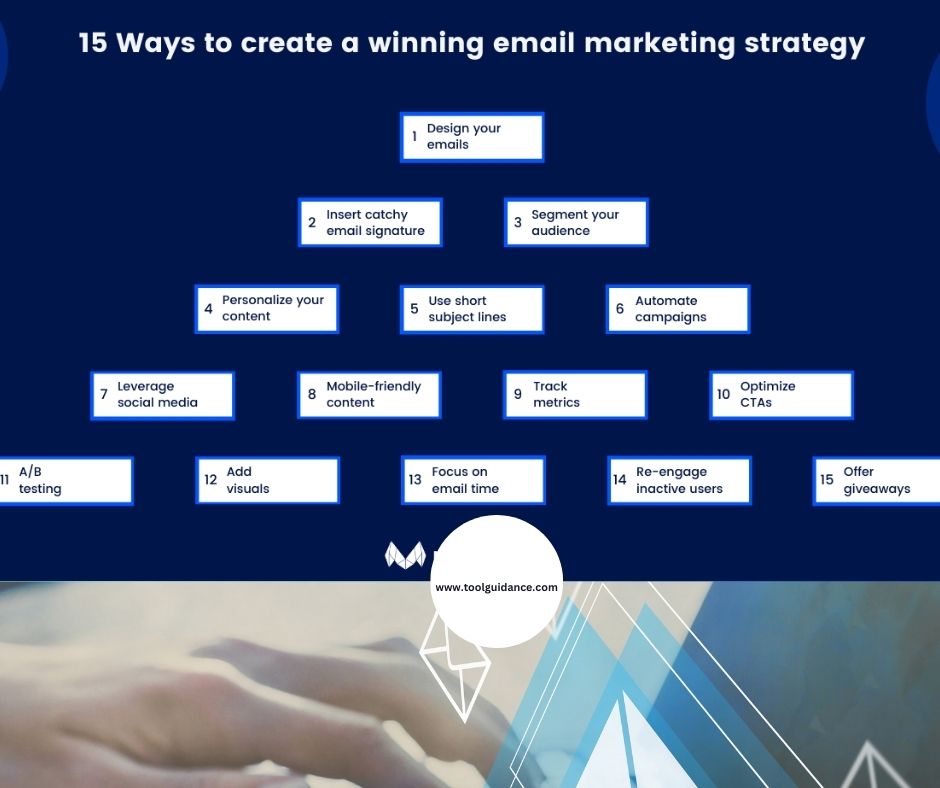
Crafting Compelling Content
Crafting compelling content for your email marketing strategy is crucial. The right content engages your audience and drives actions. This section will guide you through effective practices. Learn how to create subject lines, personalize emails, and more.
Subject Line Best Practices
Your subject line is the first thing recipients see. It determines if they open your email. Here are some best practices to follow:
- Keep it short and sweet: Aim for 50 characters or less.
- Use action words: Encourage action with verbs like “discover” or “learn”.
- Create urgency: Phrases like “limited time” or “act now” can drive opens.
- Avoid spammy words: Stay away from words like “free” or “buy now”.
- Personalize: Include the recipient’s name or location.
- Test different options: Use A/B testing to see what works best.
Personalization Tips
Personalizing your emails can significantly improve engagement. Here are some tips to get started:
- Use the recipient’s name: Address them by their first name in the email.
- Segment your audience: Group subscribers by interests or behaviors.
- Tailor content: Send relevant content based on subscriber preferences.
- Utilize dynamic content: Insert personalized recommendations or offers.
- Send emails at optimal times: Consider the recipient’s time zone and habits.
- Analyze and optimize: Use data to improve your personalization strategies.
By following these tips, you can craft engaging and personalized content. This will help you build a strong email marketing strategy.
Designing Your Emails
Designing your emails is a crucial part of your email marketing strategy. A well-designed email can captivate your audience and drive conversions. It is essential to focus on both aesthetics and functionality to ensure your message is well-received.
Responsive Design
Responsive design is about making your emails look good on any device. Many people check their emails on smartphones and tablets. So, your emails must be mobile-friendly.
- Use a single-column layout for simplicity.
- Ensure your font size is readable on small screens.
- Make buttons large and easy to tap.
Here’s an example of how a responsive email layout might look:
Hello, welcome to our newsletter!Visual Elements
Visual elements can make your emails more engaging. Use images, colors, and fonts to grab attention.
- Use high-quality images relevant to your content.
- Include your brand colors to maintain consistency.
- Use clear and legible fonts for easy reading.
Keep images small in size to avoid slow loading times. Here’s a quick guide on optimizing images:
| Format | Recommended Use | Compression |
|---|---|---|
| JPEG | Photos | High |
| PNG | Graphics with transparency | Medium |
| GIF | Animations | Low |
Visual elements should support your message, not overshadow it. Balance is key.
Automation And Workflows
Automation and Workflows are crucial components of an effective email marketing strategy. They help streamline your processes and save time. By automating certain tasks, you can ensure consistent communication with your audience without constant manual effort. Let’s delve into some key areas of automation.
Automated Campaigns
Automated campaigns are pre-set email sequences sent based on specific criteria. These can be welcome emails, newsletters, or promotional offers. Setting up automated campaigns ensures that your audience receives timely and relevant content.
- Welcome Emails: Sent to new subscribers to introduce your brand.
- Newsletters: Regular updates about your products or services.
- Promotional Offers: Special deals sent to engage and convert leads.
Behavioral Triggers
Behavioral triggers are actions that prompt specific automated responses. These actions could be anything from clicking a link to making a purchase. By setting up behavioral triggers, you can create personalized experiences for your users.
Common behavioral triggers include:
- Abandoned Cart Emails: Sent when a user leaves items in their cart.
- Post-Purchase Follow-Up: Sent after a purchase to thank the customer.
- Engagement Tracking: Emails based on user interaction with previous emails.
| Trigger | Response |
|---|---|
| Abandoned Cart | Reminder email with cart items |
| Post-Purchase | Thank you email with a discount code |
| Link Click | Follow-up email with related content |
Analyzing Performance
Analyzing the performance of your email marketing strategy is crucial. It helps you understand what’s working and what needs improvement. This process involves tracking key metrics and conducting A/B testing. Let’s dive deeper into these aspects.
Key Metrics
Tracking the right metrics can provide valuable insights. Here are some key metrics to focus on:
- Open Rate: The percentage of recipients who open your email.
- Click-Through Rate (CTR): The percentage of recipients who click on a link in your email.
- Conversion Rate: The percentage of recipients who complete a desired action, like making a purchase.
- Bounce Rate: The percentage of emails that could not be delivered.
- Unsubscribe Rate: The percentage of recipients who opt out from your email list.
Monitor these metrics regularly. They help you gauge the effectiveness of your email campaigns.
A/b Testing
A/B testing is a method of comparing two versions of an email to see which one performs better. Here’s how you can implement A/B testing:
- Create two different versions of an email (Version A and Version B).
- Send each version to a small, random segment of your email list.
- Measure the performance of each version using key metrics.
- Determine which version performs better.
- Send the winning version to the rest of your email list.
Consider testing different elements such as:
- Subject Lines: Test different subject lines to see which one has a higher open rate.
- Email Content: Experiment with different content to see what resonates with your audience.
- Call to Action (CTA): Test different CTAs to see which one drives more conversions.
A/B testing helps you optimize your email marketing strategy. It ensures your emails are as effective as possible.
Compliance And Best Practices
Creating a successful email marketing strategy involves more than just crafting engaging content. Compliance and Best Practices play a crucial role in ensuring your emails reach the intended audience without violating regulations. This section will guide you through essential compliance measures and best practices to follow.
Gdpr And Can-spam
Staying compliant with regulations like GDPR and CAN-SPAM is vital. GDPR, or General Data Protection Regulation, applies to businesses dealing with EU citizens. It requires explicit consent from users before sending emails.
Here are some key GDPR requirements:
- Obtain clear consent from users.
- Provide an easy way for users to unsubscribe.
- Maintain records of user consent.
CAN-SPAM, or the Controlling the Assault of Non-Solicited Pornography And Marketing Act, applies to US businesses. It ensures email marketing is fair and transparent.
Key CAN-SPAM requirements include:
- Include a clear identification of the sender.
- Use accurate subject lines.
- Provide a clear unsubscribe mechanism.
Maintaining Deliverability
Maintaining deliverability is essential to ensure your emails reach the inbox. Here are some tips to improve deliverability:
- Use a reputable email service provider.
- Regularly clean your email list.
- Avoid using spammy words in your subject lines and content.
- Monitor your sender reputation.
- Authenticate your emails with SPF, DKIM, and DMARC.
Keeping a high deliverability rate helps in building trust with your audience. It also ensures your emails have a higher chance of being opened and read.
By adhering to compliance regulations and best practices, you can create a robust email marketing strategy. This not only safeguards your business but also enhances the trust and engagement of your audience.
Future Trends In Email Marketing
The world of email marketing is constantly evolving. As technology advances, new trends emerge, shaping how businesses connect with their audience. Staying ahead of these trends is crucial for any successful email marketing strategy. Let’s explore some of the future trends in email marketing.
Emerging Technologies
Technology plays a significant role in email marketing’s future. Here are some emerging technologies to watch out for:
- Artificial Intelligence (AI): AI can personalize emails based on user behavior. It helps create content that resonates with your audience.
- Machine Learning (ML): ML analyzes past campaigns to predict future outcomes. It helps improve your email strategies over time.
- Interactive Emails: These emails allow users to interact within the email itself. This includes actions like filling out forms or shopping without leaving the email.
- Voice Assistants: As voice search grows, emails optimized for voice assistants will become important. They can read and respond to emails on behalf of the user.
Predicted Changes
Email marketing will see significant changes in the coming years. Here are some predicted changes to consider:
- Increased Personalization: Personalized emails will drive engagement. Customizing content for each recipient will be key.
- Enhanced Privacy: Data privacy concerns will lead to stricter regulations. Compliance with these regulations will be essential.
- Mobile Optimization: More people check emails on mobile devices. Optimizing emails for mobile will become more critical.
- Visual Content: Emails with images, videos, and infographics will engage more users. Visual content will become the norm.
- Automation: Automated emails based on triggers will save time and increase efficiency. Automation will streamline email marketing processes.
Staying updated with these trends will give you a competitive edge. Embrace these changes to enhance your email marketing strategy.
Frequently Asked Questions
What Is An Email Marketing Strategy?
An email marketing strategy is a plan to reach your audience through targeted emails. It includes goals, audience segmentation, content creation, and performance tracking.
Why Is Email Marketing Important?
Email marketing is crucial for building relationships and driving sales. It allows direct communication with customers, fostering trust and loyalty.
How Do I Segment My Email List?
Segment your email list by demographics, purchase history, and engagement levels. This helps send relevant content to specific audience groups, increasing engagement.
What Content Should I Include In Emails?
Include valuable content like promotions, updates, and educational resources. Ensure it is relevant to your audience’s interests and needs.
Conclusion
Creating an effective email marketing strategy is crucial for business success. Start by knowing your audience well. Segment your email list for targeted messages. Craft compelling subject lines to increase open rates. Use clear and concise language in your emails.
Include a strong call-to-action to drive engagement. Monitor your results and adjust your approach as needed. Consistency and personalization can help build lasting customer relationships. With these tips, you can enhance your email marketing efforts and achieve better results. Keep refining your strategy to meet your audience’s needs and preferences.
