

Email marketing is one of the most effective ways to engage with your audience and drive sales in 2025. Among the top tools for this purpose is Mailchimp, a platform trusted by millions of businesses worldwide. But is Mailchimp the best fit for your needs? In this review, we’ll dive into its features, pricing, pros, and cons to help you decide.
What is Mailchimp?
Mailchimp is a versatile email marketing platform that has grown into an all-in-one marketing solution over the years. Founded in 2001, it is particularly popular among small businesses, e-commerce brands, and content creators. With tools for automation, audience management, and analytics, Mailchimp offers everything you need to run effective marketing campaigns.
Key Features of Mailchimp in 2025
1. Email Campaign Creation and Design
Mailchimp’s drag-and-drop email editor simplifies designing professional campaigns. It offers customizable templates and personalization options, making it easy to match your brand’s identity.
2. Automation Workflows
Automate your email marketing with workflows triggered by customer actions, like welcome emails, abandoned cart reminders, and re-engagement campaigns.
3. Advanced Audience Management
Segment your audience with precision using tags, categories, and CRM features. These tools let you create highly targeted campaigns that boost engagement and conversions.
4. E-commerce Integration
Mailchimp integrates seamlessly with Shopify, WooCommerce, BigCommerce, and other platforms, enabling businesses to track sales and send personalized product recommendations.
5. Analytics and Reporting
Track open rates, click-through rates, and conversions with detailed analytics. Use A/B testing and predictive insights to optimize campaign performance.
6. Additional Features
Mailchimp also provides tools like social media scheduling, a basic website builder, and content optimization, making it a comprehensive marketing solution.
Mailchimp Pricing Plans (2025)
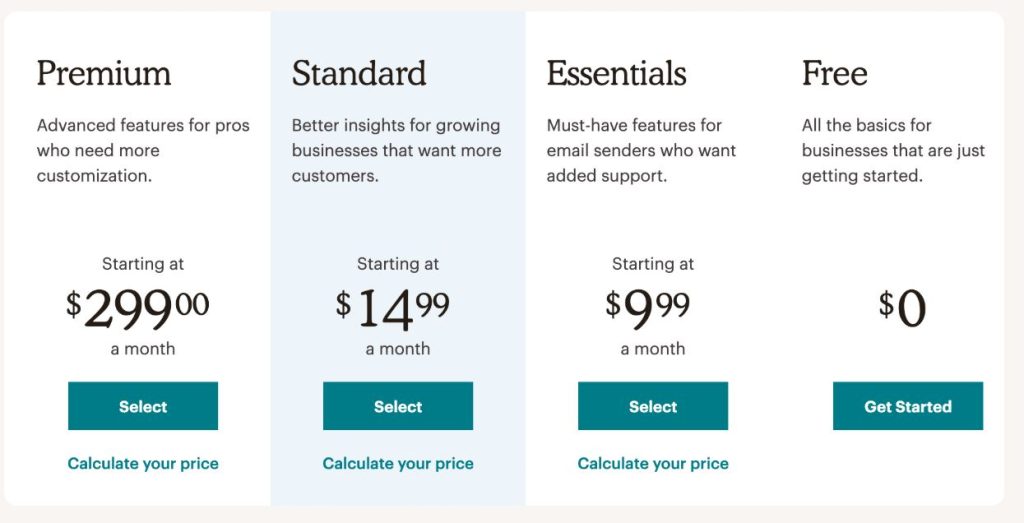
Below is a detailed table of Mailchimp’s pricing plans for 2025, including features and the best use cases for each plan.
| Plan | Price (Starting) | Features | Best For |
| Free Plan | $0 | – Up to 500 contacts and 1,000 monthly email sends. – Basic templates. – Audience management and forms. | Beginners and startups with small lists. |
| Essentials Plan | $13/month | – Everything in Free Plan. – Email templates. – A/B testing. – 24/7 email support. | Small businesses needing extra features. |
| Standard Plan | $20/month | – Everything in Essentials Plan. – Advanced segmentation. – Predictive insights. – Retargeting ads. | Growing businesses and marketers. |
| Premium Plan | $350/month | – Everything in Standard Plan. – Advanced analytics. – Priority support. – Unlimited segmentation. | Large enterprises and marketing experts. |
Pricing Plans in 2025
Mailchimp offers four pricing tiers:
- Free Plan: Ideal for beginners, supports up to 500 contacts with basic tools.
- Essentials Plan: Starts at $13/month, includes email templates, automation, and support.
- Standard Plan: Starts at $20/month, with advanced insights, segmentation, and retargeting ads.
- Premium Plan: Starts at $350/month, for large enterprises needing advanced features.
While the Free plan is great for startups, larger businesses may find the Premium plan’s pricing steep.
Pros of Mailchimp
- Beginner-Friendly Interface: Simple to use, even for those new to email marketing.
- Free Plan for Starters: Offers a cost-free option for small-scale marketing.
- Powerful Automation Features: Helps save time and improve email performance.
- Wide Integration Options: Connects with tools like Shopify, WordPress, and CRMs.
- Scalable Plans: Suitable for businesses of all sizes as they grow.
Cons of Mailchimp
- Expensive for Larger Lists: Costs rise significantly for larger contact lists.
- Limited Features on Free Plan: Advanced tools like automation and A/B testing require a paid plan.
- Learning Curve for Advanced Features: Some features may be overwhelming for beginners.
- Customer Support Limitations: Limited options for free users, which could be a concern for urgent issues.
How Does Mailchimp Compare to Competitors?
Mailchimp competes with platforms like ActiveCampaign, ConvertKit, and Constant Contact.
- Mailchimp Strengths: User-friendly, free plan, and excellent integration options.
- ActiveCampaign: Offers more advanced automation tools but may overwhelm beginners.
- ConvertKit: Designed for content creators but lacks e-commerce-friendly features.
- Constant Contact: Great for small businesses but has fewer automation features.
Who Should Use Mailchimp?
Mailchimp is ideal for:
- Small businesses and startups looking for an affordable entry point.
- E-commerce brands seeking seamless integrations.
- Content creators needing easy-to-use email design tools.
It may not be the best choice for:
- Large enterprises with complex automation needs.
- Budget-conscious marketers managing massive contact lists.
Final Verdict
Mailchimp is a robust and versatile email marketing platform that continues to shine in 2025. While its Free plan and user-friendly tools are excellent for beginners, its pricing for advanced features may deter some users. Overall, it’s a reliable choice for businesses seeking a scalable, all-in-one marketing tool.
FAQs
Q1: Is Mailchimp free to use?
Yes, Mailchimp offers a Free plan supporting up to 500 contacts and basic email marketing tools.
Q2: Does Mailchimp work with Shopify?
Yes, Mailchimp integrates seamlessly with Shopify, making it perfect for e-commerce businesses.
Q3: What are the top alternatives to Mailchimp?
ActiveCampaign, ConvertKit, and Constant Contact are strong competitors offering different strengths.
Q4: Is Mailchimp good for small businesses?
Absolutely! Its Free and Essentials plans are designed to meet the needs of small businesses.
